Mexican Slang: 35 Words and Phrases You'll Actually Hear
You can finish a Spanish course, sit down in front of a Mexican YouTuber and lose the thread within a minute. Not because of the grammar. Because of güey, neta, chido and no manches, which no course teaches and every Mexican under sixty uses.
Mexican slang is not a side topic. Mexico has more Spanish speakers than any other country, and it produces a huge share of the Spanish-language video on the internet. If your goal is to understand real Mexican Spanish, this vocabulary is not optional.
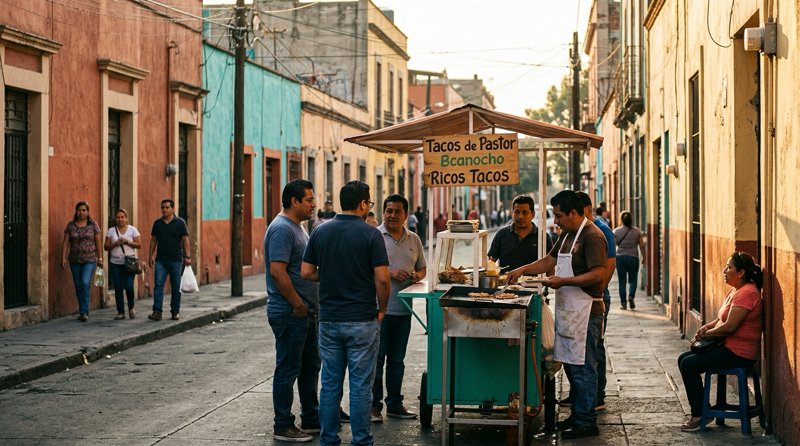
🗣️ The ten you will hear first
If you only learn ten, learn these. They appear in almost every casual conversation.
| Slang | Meaning | Example |
|---|---|---|
| güey / wey | dude, mate; also just a filler | ¿Qué onda, güey? |
| ¿Qué onda? | What's up? | ¿Qué onda? ¿Cómo estás? |
| chido | cool, great | Está bien chido tu coche. |
| padre | cool (literally "father") | ¡Qué padre! — How cool! |
| neta | truth; "seriously?" | ¿Neta? — Really? |
| no manches | no way, you're kidding | ¡No manches! ¿En serio? |
| órale | OK / wow / come on, depending on tone | Órale, vamos. |
| ahorita | in a bit (not "right now") | Ahorita lo hago. |
| mande | Pardon? / Yes? (polite) | ¿Mande? |
| chamba | work, a job | Tengo mucha chamba. |
Two of these trip up learners more than the rest. Ahorita looks like "right now" and often means "at some point soon", or even "probably not". And güey is everywhere: between friends it is affectionate, said to a stranger in the wrong tone it is rude.
👋 How to say hello in Mexican Spanish
People search for "how to say hello in Mexican" as if it were a separate language. It is not, but the greetings are distinctly Mexican:
- ¿Qué onda? — the default casual "what's up".
- ¿Quiubo? — from ¿qué hubo?, "what's happening".
- ¿Qué tal? — neutral, works everywhere in the Spanish-speaking world.
- Buenas — a quick, friendly "hi", short for buenos días / buenas tardes.
With people you don't know, older people or at work, stay with buenos días, buenas tardes and usted. Slang greetings are for friends.
👥 People and relationships
| Slang | Meaning |
|---|---|
| cuate | friend, buddy |
| carnal | close friend, almost a brother |
| chavo / chava | young guy / young woman |
| morro / morra | kid, young person (very informal, common in the north) |
| chamaco | kid |
| jefe / jefa | dad / mom (also "boss") |
| fresa | posh, snobby — literally "strawberry" |
| compa | mate, from compadre |
Mi jefa meaning "my mom" is one of those details that makes a Mexican conversation suddenly make sense.
💸 Money, food and everyday life
- Lana — money (literally "wool"). No traigo lana. — I don't have any money on me.
- Varo — also money; no tengo ni un varo, "I'm broke".
- Chela — a beer.
- Antojo — a craving, especially for street food.
- Camión — a city bus, not a lorry. This one confuses everyone from Spain.
- La cruda — a hangover.
- ¡Aguas! — Watch out! Shouted when something is falling or a car is coming.
- Chafa — cheap, low quality. Este teléfono está bien chafa.
- Gacho — bad, mean, unfair. ¡Qué gacho! — That's harsh.
🔁 Yes, no and reactions
Mexicans have their own versions of yes and no, and you will hear them constantly in casual speech:
- Simón — yes (playful).
- Nel — no.
- Va — OK, deal. ¿Nos vemos a las cinco? — Va.
- Sale — OK, sounds good. Sale, ahí nos vemos.
- ¡Qué oso! — How embarrassing! (literally "what a bear").
- Al chile — honestly, to be blunt. Informal.
📱 Mexican texting abbreviations
Written Mexican Spanish online has its own shorthand. The most common:
| Abbreviation | Full form | Meaning |
|---|---|---|
| tqm | te quiero mucho | love you lots |
| xq / pq | por qué / porque | why / because |
| ntp | no te preocupes | don't worry |
| tmb | también | also |
| bn | bien | good |
| q / k | que | that, what |
| x | por | for, by |
| pa | para | for, to |
If you follow Mexican creators, you will see these under every video. They are a good, low-stakes way to start reading informal Spanish.
⚠️ A word on rude words
Mexican Spanish has a rich and famous set of swear words, and some everyday-sounding words are ruder than they look. Pinche, for example, means "damn" or "lousy" and is not something to say to your host's grandmother.
We are not listing the strong ones here. You will recognise them quickly in context: they are the words that make everyone laugh or go quiet. When in doubt, ask a Mexican friend before using one.
🎧 How to learn Mexican slang by ear
Lists help you recognise a word. Hearing it said is what makes it stick, because slang is mostly about tone: órale can be encouragement, surprise or impatience depending on how it is said.
- Watch Mexican creators and shows, not neutral dubbing. Dubbed films use a deliberately neutral Spanish with almost no slang. Street-interview channels filmed in Mexico City, Mexican vloggers and Mexican comedies are full of it. See the best YouTube channels to learn Spanish and learning Spanish with TV shows.
- Keep the subtitles in Spanish. English subtitles translate ¿qué onda? as "what's up" and you never learn that it was ¿qué onda?. Spanish subtitles show you the word itself — see Spanish subtitles to learn Spanish.
- Collect the words you keep hearing. Ignore the ones that come up once; the ones that come back every video are the ones worth learning.
- Test whether you actually catch them. Gappier hides words from a YouTube video's real subtitles and pauses until you type what you heard. Slang is exactly what your ear misses at first, so it shows up fast.
❓ Frequently asked questions
Is Mexican slang used in other countries?
Some of it. Chido and güey are understood across much of Latin America thanks to Mexican TV and music, but most of this list is distinctly Mexican. Other countries have their own sets: see Colombian, Argentine, Dominican and Puerto Rican slang, and Mexican or Castilian Spanish for how the varieties compare.
Is güey rude?
Between friends, no: it is the most common word in casual Mexican speech. Said to a stranger, or in an aggressive tone, it can be. Wait until people use it with you.
What does ahorita really mean?
In theory "right now". In practice anything from "in a minute" to "later" to "politely, no". If you need something now, say ahorita mismo or ya.
Should beginners learn slang?
Learn to recognise it early, because you will hear it from your first real video. Learn to use it later, once you can tell from context when it fits.
Does Mexican Spanish have different grammar?
Barely. It uses ustedes instead of vosotros, like all of Latin America, and has its own vocabulary and accent. The grammar is the same Spanish.
✅ In short
- Mexican slang is everywhere in real Mexican speech, and courses skip it.
- Start with the core ten: güey, ¿qué onda?, chido, padre, neta, no manches, órale, ahorita, mande, chamba.
- Watch Mexican creators and shows with Spanish subtitles, not dubbed films.
- Learn to recognise slang early and to use it once context tells you when it fits.